A well-designed garden can add character, comfort, and natural beauty to any home. It does not need to be enormous or expensive to make an impression. With thoughtful planning, suitable plants, practical organization, and a few attractive details, even a modest outdoor area can become a place where you enjoy spending time.
DecoradHouse Garden Tips by DecoratorAdvice focuses on practical ways to improve your garden while keeping maintenance, budget, and everyday use in mind. From choosing plants and preparing soil to refreshing patios and introducing outdoor lighting, small decisions can gradually create a more polished and enjoyable landscape.
1. Simple DecoradHouse Garden Tips for Beginners
Starting a garden is easier when you avoid trying to accomplish everything at once. Begin by studying the space you already have and identifying what it can realistically support. Sunlight, drainage, soil quality, available room, and your own maintenance routine all influence the final result.
A garden should be designed around your lifestyle. If you have little free time, prioritize low-maintenance plants and simple layouts. If gardening is a hobby you enjoy, you may prefer larger planting areas and more variety.
Understand Your Garden Space
Before buying anything, spend some time observing your garden. Notice which areas receive direct sunlight and which remain shaded for most of the day. Pay attention to places where rainwater collects and areas that dry out quickly.
Measure the available space and identify existing features you want to keep, such as mature trees, walls, fences, patios, or established flower beds.
Think about movement as well. Pathways should connect important areas without forcing people to walk through planting beds. If you plan to add seating, leave enough room around it for comfortable movement.
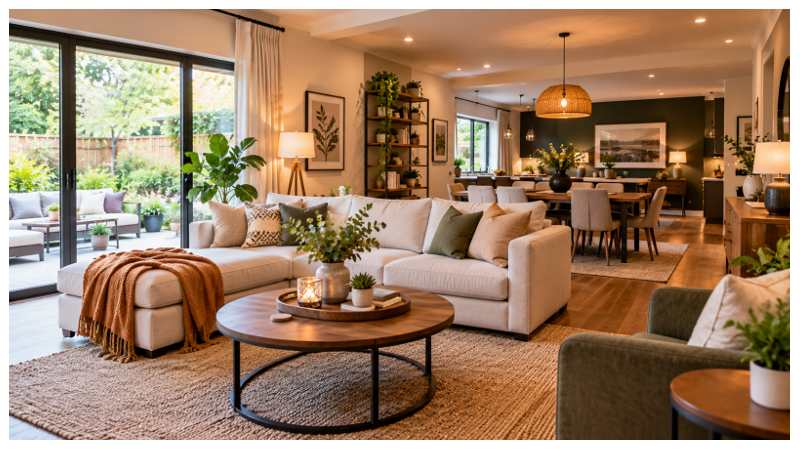
Looking at the garden from inside your home can also reveal opportunities. A colorful planting bed outside a window or a small tree near a patio can create a stronger visual relationship between indoor and outdoor spaces.
Choose Suitable Plants
Plant selection should be based on your garden’s conditions rather than appearance alone. Every plant has different preferences regarding sunlight, moisture, temperature, soil, and available growing space.
Choose varieties that are appropriate for your local environment whenever possible. Plants that naturally suit the conditions are often easier to maintain than those that require constant adjustment.
Check the expected mature size before planting. A small shrub can eventually become surprisingly wide, while a young tree may develop a large canopy. Providing enough space from the beginning helps prevent overcrowding later.
Try combining different heights and textures. Ground-level plants, medium shrubs, and taller features can create layers and make the garden feel more dynamic.
Prepare the Soil Properly
Healthy soil provides an important foundation for successful planting. Begin by clearing unwanted weeds, stones, roots, and debris from the areas you intend to cultivate.
If the soil is poor, suitable organic material may help improve its structure. Compost can be useful in many gardens, although the right amount depends on the existing soil and the plants you intend to grow.
Drainage should also be considered. Plants that dislike wet roots may struggle in areas where water remains for long periods.
Avoid treating the entire garden as though every section has identical needs. Different planting areas may require different approaches depending on their sunlight, moisture, and soil conditions.
2. DecoradHouse Garden Tips for Beautiful Outdoor Spaces
A garden can be practical while still having plenty of visual personality. Good garden design comes from creating relationships between plants, colors, textures, pathways, and decorative features.
Rather than filling every empty space, allow important elements to stand out. A little open space can make colorful planting areas look more impressive and can simplify maintenance.
Add Color and Texture
Flowers provide obvious bursts of color, but foliage can be equally important. Plants with different shades of green, leaf shapes, and textures can keep the garden visually interesting even when flowers are not blooming.
Choose colors that work comfortably together. A limited palette can create a calm appearance, while stronger contrasting shades can make selected areas more energetic.
Containers are useful for introducing seasonal color. They can be moved between locations and changed when you want a different look.
Consider your home’s exterior when selecting colors. Coordinating garden tones with the house, patio, fence, or entrance can make the entire property feel more connected.
Create Balanced Plant Arrangements
Plant placement can influence how large, organized, or welcoming a garden appears. Taller plants can form a background, while medium and low-growing varieties can fill the spaces closer to pathways.
Grouping plants can often create a stronger visual effect than scattering individual specimens throughout the garden. Repeating selected plants in several areas can also establish consistency.
Create focal points where you want attention to go. A distinctive tree, attractive planter, flowering border, or decorative feature can provide a natural point of interest.
Avoid excessive symmetry unless it suits your style. Natural-looking arrangements can feel relaxed, while structured layouts may work better for formal gardens.
Choose Simple Garden Décor
Garden décor should enhance the landscape rather than overpower it. A carefully chosen bench, trellis, planter, sculpture, decorative stone, or small water feature can add character.
Consider the material and scale of each item. Natural materials may blend beautifully with greenery, while simple contemporary pieces can complement a modern property.
Do not place decorations simply to fill empty areas. Every feature should have a purpose, whether it provides seating, creates a focal point, supports plants, or contributes to the overall appearance.
Keeping décor limited also makes cleaning and maintenance easier.
3. Low-Maintenance Garden Ideas
A garden should fit the amount of time you can realistically dedicate to it. If your schedule is busy, a complicated landscape can quickly become difficult to manage.
Low-maintenance gardening is not about creating a boring space. It is about selecting suitable plants and systems that reduce unnecessary work.
Select Easy-Care Plants
Look for plants that naturally perform well in your growing conditions. Varieties that tolerate local weather and soil conditions may require less intervention.
Group plants according to their needs. Putting plants with similar watering requirements together makes routine care more efficient.
Avoid creating too many separate planting zones with completely different requirements. A simpler design can save considerable time.
Also consider how much pruning, feeding, or seasonal care each plant requires before adding it to your garden.
Control Weeds Naturally
Regular maintenance is one of the easiest ways to prevent weeds from becoming a major problem. Remove unwanted growth while it is still small and manageable.
Mulching can help cover exposed soil and reduce the space available for weeds. Depending on the material, mulch may also help conserve moisture.
Suitable groundcover plants can provide another option in areas where they are appropriate.
Keep planting beds reasonably full without overcrowding them. Bare soil can provide opportunities for unwanted growth, while carefully planned plant coverage can reduce maintenance.
Simplify Garden Watering
Efficient watering begins with understanding plant requirements. Avoid giving every plant the same amount of water simply because they are in the same garden.
Check soil moisture when appropriate and adjust your routine according to weather conditions. Rainfall, temperature, wind, and seasonal changes can all influence watering needs.
Drip irrigation and soaker systems can be useful for certain planting areas. They may deliver water closer to plant roots while reducing unnecessary wetting of surrounding surfaces.
Containers often dry out more quickly than ground-level beds, so check them regularly.
4. Smart Garden Organization Tips
Organization can make gardening considerably easier. When tools, supplies, and outdoor features have designated places, routine tasks become faster and the garden looks less cluttered.
Keep Gardening Tools Organized
Store gardening equipment in one convenient location whenever possible. A shed, cabinet, storage box, or wall-mounted rack can keep tools together.
Arrange frequently used tools where they are easy to reach. Seasonal equipment can be stored farther away to free up accessible space.
Clean tools after use when necessary and keep them protected from excessive moisture. Proper storage can extend their useful life and make future gardening tasks more convenient.
Create Useful Storage Areas
Outdoor storage should combine practicality with a tidy appearance. Weather-resistant boxes can hold small items, while larger sheds can accommodate tools and equipment.
Use vertical surfaces where possible. Hooks and shelving can transform unused wall space into valuable storage.
Keep potentially hazardous products and sharp tools securely stored, particularly in homes where children or pets use the garden.
Good storage should help hide clutter without making frequently used equipment difficult to access.
Maintain Clear Garden Pathways
A clear pathway gives the garden structure and makes it easier to move between different areas. Paths can connect the house, patio, planting beds, storage areas, and garden entrance.
Choose materials that suit the style of your property and the amount of foot traffic expected.
Keep pathways free of weeds, fallen leaves, mud, and other debris. Trim plants that begin to spread across the walking area.
A well-maintained path is not only more attractive but also makes everyday garden tasks safer and easier.
5. Budget-Friendly DecoradHouse Garden Ideas
A garden makeover does not have to involve expensive landscaping. Creativity, maintenance, and thoughtful reuse can produce impressive results without a major investment.
Refresh Existing Planters
Before replacing old containers, see whether they can be cleaned, repaired, or repainted. A suitable outdoor finish can give a tired planter a completely different appearance.
Arrange containers in groups rather than spreading them randomly. Different heights can create depth, while similar materials or colors can make the arrangement feel coordinated.
Make sure containers have suitable drainage and enough space for the roots of the plants you choose.
Try Easy DIY Projects
Simple DIY projects can personalize an outdoor area while keeping costs under control. Depending on your skills, you could create a basic trellis, refresh outdoor furniture, build a small plant stand, or make simple garden storage.
Choose projects that match your experience and use materials appropriate for outdoor conditions.
Measure carefully before cutting materials, and use suitable safety equipment when working with tools.
For electrical, structural, or other specialized work, use appropriate professional help rather than attempting unfamiliar high-risk tasks.
Repurpose Everyday Items
Unused household items can sometimes become useful garden features. Suitable containers can become planters, old shelves may work as storage, and sturdy materials can potentially be transformed into garden furniture.
Always consider whether an item can withstand rain, sunlight, humidity, and temperature changes before placing it outdoors.
Repurposing should improve the garden rather than create additional clutter. Choose projects that have a clear purpose and fit naturally into the landscape.
6. Patio and Outdoor Garden Tips
A patio can become an important connection between the house and garden. With the right furniture, plants, and arrangement, it can provide a comfortable area for relaxing, dining, or entertaining.
Design a Comfortable Seating Area
Start with furniture that fits the size of the patio. Large furniture can overwhelm a small area, while undersized pieces may leave a large patio looking unfinished.
Arrange seating to support the way you plan to use the space. Chairs can face one another to encourage conversation, while a dining arrangement can create a dedicated outdoor meal area.
Add suitable cushions or outdoor textiles for comfort and personality. Leave enough space around furniture for easy movement.
Decorate With Potted Plants
Potted plants can soften hard patio surfaces and introduce greenery without requiring permanent landscaping.
Use a mixture of container sizes to create visual layers. Larger pots can anchor corners, while smaller containers can decorate tables, steps, or edges.
Select plants according to the patio’s sunlight and wind conditions. Remember that containers may dry out faster than plants growing directly in the ground.
Connect Your Patio With the Garden
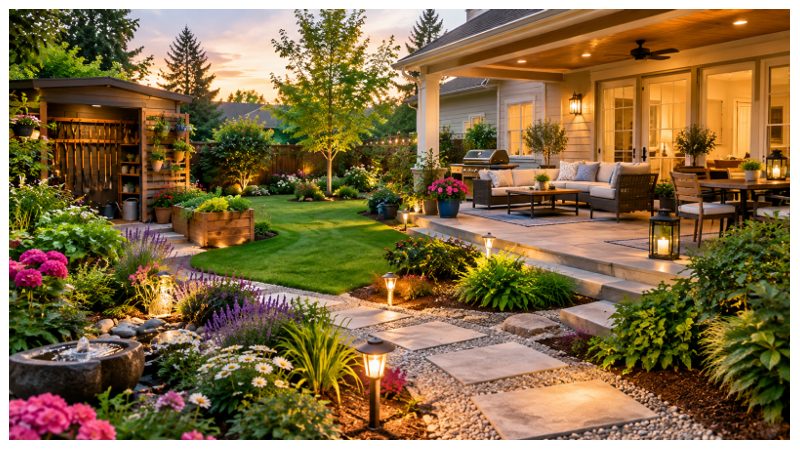
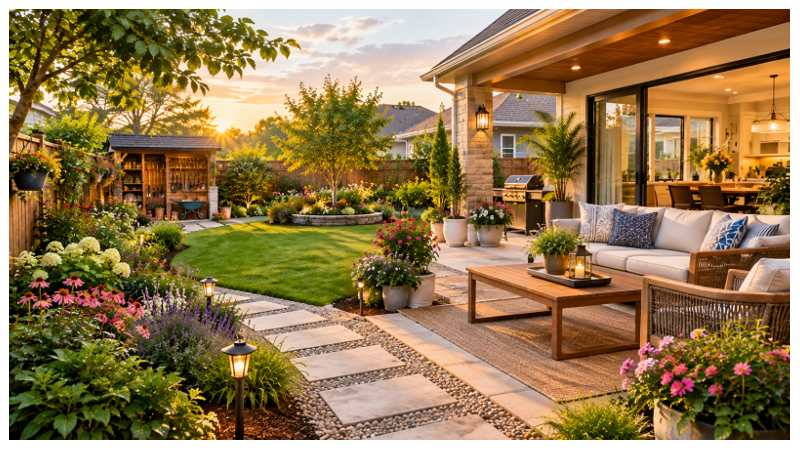
A patio and garden can feel more cohesive when they share visual elements. Repeat similar colors, plants, materials, or decorative features in both areas.
For example, matching planters can visually link a seating zone with nearby flower beds.
Stepping stones, curved planting borders, and small transitional areas can soften the boundary between hard surfaces and greenery.
A smooth transition can make the outdoor area feel larger and more thoughtfully designed.
7. Garden Lighting and Lumination Ideas
Outdoor lighting can change the character of a garden after sunset. It can improve visibility, define pathways, and highlight features while making outdoor seating areas more welcoming.
Light Up Garden Pathways
Path lighting can make evening movement easier while adding structure to the landscape. Position lights carefully so they illuminate walking surfaces without creating uncomfortable glare.
Solar-powered fixtures can be convenient for suitable locations, while wired lighting may provide additional installation options.
Keep fixtures clean and check them periodically for damage, loose connections, or plants that have grown over them.
Highlight Plants and Features
Accent lighting can draw attention to selected garden features. A tree, textured wall, sculpture, flower bed, or water feature can become a focal point after dark.
There is no need to illuminate every corner. A few carefully positioned lights can create depth and contrast.
Experiment with light direction to reveal textures and shapes while avoiding direct glare toward seating areas or neighboring properties.
Create a Warm Evening Setting
Patios and seating areas benefit from gentle illumination. Soft lights can create a relaxed environment for conversations, outdoor meals, or quiet evenings.
Combine practical lighting near paths and entrances with decorative fixtures around seating areas.
Avoid excessive brightness. A garden often looks more inviting when some areas remain naturally darker while important features receive subtle illumination.
8. Common Garden Problems to Avoid
Even a carefully designed garden can become difficult to manage if basic growing requirements are overlooked. A little preparation can prevent many common problems.
Avoid Overwatering Plants
Plants require water, but excessive moisture can be harmful to varieties that prefer well-drained conditions.
Check soil moisture before watering when practical, and learn the specific needs of your plants.
Take weather into account as well. A garden may require less supplemental water following significant rainfall.
Containers require particular attention because their soil can dry out faster than ground-level planting areas.
Prevent Plant Overcrowding
Plants need enough room for their roots and foliage to develop. Crowded planting can increase competition and make maintenance more difficult.
Check the expected mature size of plants before positioning them.
Proper spacing may make a new garden appear less full initially, but plants will develop over time. Giving them room can improve airflow and make pruning easier.
Match Plants With Local Conditions
A plant may look perfect in a photograph but still be unsuitable for your garden. Consider sunlight, soil, moisture, temperature, and available growing room before purchasing.
Plants that are naturally adapted to local conditions may be easier to maintain.
Research each plant’s basic requirements rather than choosing solely according to appearance. This simple step can prevent wasted money and disappointing results.
9. Final DecoradHouse Garden Tips by DecoratorAdvice
A successful garden is created through a combination of suitable plants, sensible organization, thoughtful design, and regular care. You do not have to complete a major transformation in one season.
Start with the most important improvements and gradually develop the garden as you learn what works for your space.
Keep Your Garden Practical
Practicality should influence every decision. Select plants you can maintain, create paths that are easy to use, and organize tools so routine work does not become frustrating.
Simple watering systems, useful storage, sensible planting arrangements, and suitable lighting can make a garden significantly easier to manage.
Remember that a garden should support your lifestyle rather than become a constant source of work.
Build an Outdoor Space You Enjoy
The most successful garden is one that gives you a reason to spend time outside. You might enjoy colorful flowers, productive vegetable beds, quiet greenery, comfortable seating, or a mixture of everything.
Use DecoradHouse Garden Tips by DecoratorAdvice as a foundation, then adapt each idea to your home’s architecture, available space, local conditions, budget, and personal taste.
You can begin with something as simple as refreshing a few planters or reorganizing a pathway. Over time, those small improvements can develop into a balanced outdoor environment that feels connected to your home.
A beautiful garden does not need to be complicated. When plants, pathways, seating, storage, décor, and lighting work together, an ordinary outdoor area can become a practical and inviting part of everyday home life.